Saturday, June 2, 2012

Diamond Jubilee Memories

No one knows more about the Royal Family than their staff. They know which royal is most popular below stairs, who the Queen gives her cast-off clothes to, who has his shoelaces ironed, and what goes on behind a trick mirror at Buckingham Palace. Some 1,200 men and women work in a variety of posts across all five royal residences, including a fender mender, head coffee-room maid and a young man whose duties include replacing a sheet of black blotting paper on the Queen’s desk every day so no one could possibly read her handwriting by examining the pad.

One rather exclusive group was the crew (Royal Yachtsmen) of the Royal Yacht Britannia. Primarily Officers and Men of the Royal Navy there was also a small contingent of Royal Marines on board. The Royal Marines Band performed for Heads of State at State Dinners, Receptions, Garden Parties, Royal Weddings as well as Private Concerts for the Royal family and the Crew of the Royal Yacht. This brought everyone on board into close contact with both members of the Royal family and also that group of Little Terrorists of whom no-one could say anything bad – the Corgis. What you have to realize is that the Queen loves Corgis more than anything else. On her honeymoon she took Susan (her Corgi) with her and the corgis have travelled with her ever since. Over the years there have been many escapades with the Royal Corgis which began when the Queen Mother gave the Queen her first Corgi when she was seven. This was the start of everything and the beginning of what became two corgi camps – the lads from Clarence House (Queen Mothers Corgis) and the boys of Buck House (the Royal Favourites)! The Corgis have the run of the Royal apartments and many a time have been in attendance en-masse at state receptions and garden parties. Here they could often be seen displaying their herding instincts by nipping at the heels of some rather distinguished guests. Their diet is as good as the state dinners and the Corgi Menu is posted daily in the Royal Kitchens. The Queen is very much ‘hands on’ with the Corgis and when she puts on her head scarf they know – it is time for a walk! Royal duties aside, she walks them after lunch whenever she can and at 5.00pm prompt the Queen feeds the crew and mixes the food in their silver bowls with a silver spoon. There is always a silver tray with dog biscuits at her side for their daily treats. Discipline is the Queens domain alone, and woe betide anyone else who even attempts to tell them off!
In this the Diamond Jubilee here are a few ‘behind the scene’ facts and royal idiosyncrasies collected during the reign of H.M. Queen Elizabeth II.

The shoelace
The Prince of Wales has never picked up his own clothes or undressed himself — he has three valets to take care of his clothes. If he has several engagements in one day, his valet places several ties in the car so he can change en route. He likes to wear the tie of the organisation or military establishment he is visiting. The record is five changes of tie in one day. A valet’s other duties include ironing the Prince’s shoelaces whenever his shoes are taken off.
Out of the closet
Regarded as the most warm and welcoming state room in the palace, the White Drawing Room (actually painted yellow) has a secret ante-chamber. In one corner of the drawing room is a large fixture containing a full-size mirror. During functions a footman is stationed alongside it and at a signal he presses a button and the entire fitment swings open to reveal the Royal Family, who have been waiting in the Royal Closet, a small drawing room hidden behind the mirror, having their own pre-function drinks!
Perks
Working in the Royal Household is not a highly salaried position — but it does come with a number of perks. Household staff can join seven sports and social clubs and use the Queen’s swimming pool at Buckingham Palace. The rule states that if a staff member is swimming and a royal appears they have to get out of the pool unless invited to stay. If a staff member arrives to swim and a royal is already swimming, they must not attempt to join them.
Our humble abode
Buckingham Palace, the most famous address in the world, has been referred to as  ‘The House’ by royals ever since the Queen’s grandfather, George V, said: ‘Sandringham is my home, Buckingham Palace is just a house.’
Terrorists surround Police Dog
Returning from a visit to Canada the Queen was unaware that three of her dogs had just caused no little excitement.. London newspapers reported that the three corgis slipped away from royal aides waiting to greet the Queen at Heathrow Airport, hurtled across the grass and, growling and snarling, circled a German shepherd police dog. The small terrorists were recaptured before any blood was spilled.

THEN & NOW


Friday, November 11, 2011

Burlington Performing Arts Centre!


I have just recently had the pleasure of conducting the Burlington Teen Tour Band in a series of three concerts at the newly designed Burlington Performing Arts Centre in Burlington, Ontario, Canada. This thriving community which has been able to boast supporting the largest, most award winning Youth Band in Canada (otherwise know around the world as “Canada’s Musical Ambassadors”)has just completed the building of a new Performing Arts Centre. The Band who for the past 30 years plus have given annual concert at a 2400 seat venue moved to the smaller stage and environments of the new 700 seat concert hall. The thoughts of performance with a 160 piece musical ensemble would seem fairly obvious at first glance. Smaller venue – large number of musicians – possible problem with fitting on the stage and also the sound being too loud! I frequently tell the band that “The sign of a good musical ensemble is one where every instrument can be heard at the same time, without any one being the dominant”. DYNAMICS and CONTROLLED playing are essential to create the different shades, colours and emotions in the music. However, even by listening and adjusting in each performance area sometimes logistics play a major role. In a small confined space all sound can bleed into one another and then it just becomes a cacophony . So, with these thoughts running through my head the band set up on stage (and it was well filled) and we played our first notes in our hometown venue. We experimented with dynamics and went from pp to ff and fff. We used Soloists to see what the acoustics were really like. Can one flute playing mf project over the other 150 players or would they be buried and left with their notes suspended from the ceiling to be lost in the wonderful labyrinth of theatre ropes, pulleys and computerized technology?
AMAZING – with the design of the Arts Centre function was actually working! NO matter where one stood or sat the acoustics were fabulous. NO mics, No electronic enhancements – PURE ACOUSTIC PLAYING – there was not a dead area in the hall and the acoustical engineers had provided a wonderful performance environment for any size group. The acoustics work for a large group and equally well for smaller ensembles. I played a few notes on flute myself and just filled the space with sound. It was a joy to perform in the intimate setting and I certainly am happy to put my stamp of approval on it. If I were to write a review it would be to give accolades to the fact that function actually works. So many of the new performing venues being built end up looking great and the Architects have a lot of fun in presenting the form of the structure but lose out on the function with the result that some of the nicest looking concerts halls today are only that – nice looking – but nothing to write home about as far as sound and performance goes. Here in Burlington – FORM meets FUNCTION! After three concerts the results are now in and the Burlington Performing Arts Centre( from a performers perspective) has my Acoustical vote. BRAVO!!!!!
What about the rest of the building – the changing rooms, performers lounge, green room, loading area, stage entrance, stage crew, sound & lighting??? Everything is accessible to the stage area which is good.
CHANGING ROOMS: Personally I thought they were a little narrow for my taste (I like to fling my arms around when changing and have people in at the same time so I need lots of space). There are three of these rooms and they are well situated, each with their own shower and facilities but with four people in them it can become quite cosy. For the main group of the band we utilized a nice (smaller size auditorium /recital room) that can also be used for receptions and such like. Let’s be honest – how many times will they face the daunting task of operating with a 160 piece group?
PERFORMERS LOUNGE: A very nice area right beside the stage entrance with a couch, sitting area, fridge and microwave. Perhaps this is where I should wave my arms around and not the changing room.
GREEN ROOM is a nice area away from the main stage where any number of events can be entertained. We used it as a warm-up room which worked perfectly well with no sound filtering into the main areas whatsoever.
STAFF: The Stage & Sound and Lighting staff were absolutely outstanding! There as no grumbling or half-hearted work ethics. ALL of the staff were very professional and went out of their way to assist in putting on a first class performance. To Chris and his Merry Band of Associates – Thank You for making it easy and a pleasure. Your attitude will enhance the reputation of the Centre!

Saturday, May 7, 2011

Performance Tips


Chances are, that sometime in your flute playing career, you are going to have to do some sort of performance. Whether it’s a ten member audience performance, or a major festival, the tips here can help you out a lot.
1. Nerves
Okay, your big solo performance is coming up faster than you can think and you’re looking forward to it, but you don’t know what you’re going to do and you’re nervous beyond belief. Whether it’s in front of a crowd of 15 or 15,000, most people do get nervous when they have to perform. Be sure to put on deodorant before you leave your house; you don’t want to be a stinky performer (even if you are at a distance from your audience) Before your performance, in the car ride over maybe, start taking very long deep breaths to relax yourself.
When you get to where you’re supposed to be, WARM UP BEFORE YOU PERFORM! This is extremely important. You don’t want to go onstage with a cold, out of tune flute, or tensed up lips. Now it’s time to play your piece. Try not to think about how many people are there, but as you’re walking onstage, don’t just look down at the ground, look at your audience, maybe even smile. Before you start to play, don’t think about the audience or what they’re thinking about you. Imagine that it’s just another one of your practice sessions and that you are the only person in the room. When you start to play, concentrate on your music; don’t let your stage-fright distract or overcome you. There is nothing worse than losing your concentration and screwing up the song that you've played a thousand other times perfectly. When you’re finished your piece (or pieces in some cases), smile, take a bow or curtsy, and walk out gracefully. And that’s it! You’re done! It’s over! There’s nothing left to worry about. Until your next performance of course…
2. Playing
When people play in front of an audience, their pieces usually tend to be faster, less expressive, and generally not as good as they usually are. In any sort of competition, this can cost serious marks. To prevent this, make sure you have practised and perfected the song you are going to perform. For extra practice, play it in front of friends, family, your dog, or whoever else will listen; this will lower your chances of freezing up in front of an audience. During the big performance, be sure to concentrate on your music (even with a memorized piece, concentrate on it in your mind). Pay attention to the little details that many people tend to forget during performances such as dynamics, articulations, expressiveness, etc… In competitions, doing this will set you apart from the other competitors because they are probably just as nervous as you are.
3. Demeanor
One of the most important things of a performer is his/her demeanor. The worst thing possible to do in any performance is to mope onto stage, not looking at your audience, play your piece, then mope off again without bowing or extending any sort of courtesy to your audience or judges. Walk on stage looking proud, like you’re enjoying being there, make eye contact with the members of your audience and maybe even smile. When you get to the spot you’re supposed to be in, put any music on the stand or make any adjustments that you need to. If you have piano accompaniment, tune your flute.
Take your time before you start to play; don’t be rushed (this can even create suspense in your audience for a greater effect). Take a nice, deep breath and start playing. If you make a mistake, KEEP ON GOING. Don’t let it ruin your performance and whatever you do, NEVER, EVER, EVER, STOP AND RESTART THE ENTIRE PIECE OR SECTION THAT YOU MADE THE MISTAKE IN. Most people won’t even realize that you made it and even if they do, it’s not that big of a deal. After you’re done playing, look at your audience, smile (even if you’ve played horribly), and take a bow or curtsy. Acting professional will make your audience think you’re professional, whether your actual performance is done well or not.
4. Be Prepared
For any performance, the most important thing is to be prepared. Make sure you know or have chosen which pieces you are supposed to play well in advance. Practise them until they are perfect and even then, practise them more. Make sure you know the exact year, month, day, hour, minute, and second that you have to play. Don’t be late, in fact, be early! By at least forty-five minutes to a half an hour to give you time to warm-up and relax before you have to play. If you have a tendency to sleep in, make sure you have alarm clocks set or somebody to wake you up. Being rushed can needlessly ruin your playing. Make sure your accompanist also knows the time of your performance and is early too. If your pieces are in some sort of collection, bookmark the pages so that you won’t have to flip through your music before you start playing. If you have to give copies of your music to an adjudicator, make sure you have them ready and the pages marked as well. The most important thing to remember is just to be prepared for any contingency. Being rushed and performing horribly, forgetting your music, or even missing your performance are all embarrassing scenarios that you do not want to experience.
Oh, and always remember to have fun while you’re performing. Best of Luck

Wednesday, April 27, 2011

Royal Wedding


What is it like to be part of history and perform at a ROYAL WEDDING?

30 years ago the United Kingdom had a national holiday – a day I worked!
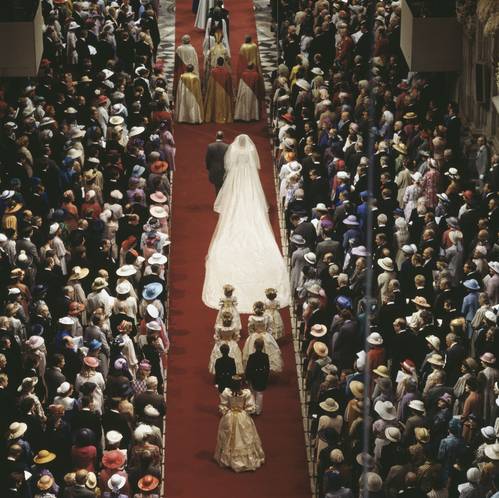
Yes – I performed at the wedding of Charles, Prince of Wales, and Lady Diana Stillwood Frances Spencer 30 years ago on Wednesday, 29 July 1981 at St Paul's Cathedral, London, United Kingdom. The marriage was widely billed as a "fairytale wedding" and the "wedding of the century".

I was then the principal flute with the Band of Her Majesty’s Royal Marines and considered it an honour to be part of what was “history in the making”. As the big day comes closer for Prince William and Kate Middleton I cannot help but think back and make some comparisons.

As it is today, the nation was in a celebratory mood and rehearsals and preparations for the grand event are very much the same. We (Royal Marines) rehearsed before the event in the early hours of the morning (all streets being closed) and on the day of the wedding it was a 5.00am breakfast before getting ready for the Pageantry. Every detail (over 300 pages) is planned, rehearsed and then rehearsed again. The Band of the Royal Marines led the procession and also provided a fanfare team inside St. Paul’s cathedral for the wedding ceremony.
There were 3,500 people in the congregation at St Paul's Cathedral. It was held at St Paul's rather than Westminster Abbey because St Paul's offered more seating and permits a longer procession through the streets of London. It was estimated that 750 million people watched the ceremony worldwide, making it the most popular programme ever broadcast, and this figure rose to a billion when the radio audience is added in. Two million spectators lined the route of Diana's procession from Clarence House, with 4,000 police and 2,200 military officers to manage the crowds.
After the ceremony, the couple went to Buckingham Palace for a dinner for 120. The couple had 27 wedding cakes with the official wedding cake being supplied by the Naval Armed Forces.
How does this compare with the Royal Wedding of Prince William and Kate Middleton?
Rehearsals have gone similar to those of 30 years ago and below is the schedule that will be followed Friday April 29th, 2011. The Band of Royal Marines will once again be first in line and will be the band stationed right outside Westminster Abbey at Parliament Square.


Friday April 29th, 2011
From 0815 to 0945 - The general congregation will arrive at the Great North Door of Westminster Abbey.
09.15 -10.45 The guests of Prince William and Catherine will start arriving at Westminster Abbey.


10.20 The Band of Royal Marines will leave for Parliament Square from the Wellington Barracks.


10.25 The Band of the Grenadier Guards leave the Wellington Barracks and head to Marlborough Road.


10.50 The Band of the Welsh Guards leave from Wellington Barracks and head to St James’s Palace.


10.50 Members of Parliament from Commonwealth countries, the diplomatic service and other VIP guests arrive to Westminster.


11.10 Prince William and his brother/ best man Prince Harry will leave Clarence House driven in a Bentley. They will pass the Horse Guards Parade, the Cenotaph war memorial, the Houses of Parliament and Big Ben.


11.20 The 1st Battalion the Irish Guards will be playing in front of Buckingham Palace.Various members Royal families from around the world arrive at the Abbey as Catherine’s mother Carole Middleton and brother James depart from Goring Hotel, Kensington.


11.25 The first Members of the British Royal family leave the Palace.


11.35 Prince Andrew and his daughters, Princesses Beatrice and Eugenie, the Earl and Countess of Wessex, Princess Anne and Vice Admiral Timothy Laurence leave Palace.11.40 Prince Charles and Camilla leave Clarence House.


11.40 The Queen and Duke of Edinburgh leave Buckingham Palace and will be the last guests to arrive at Westminster Abbey, at 11.45hrs


11.50 Catherine’s Bridesmaids and pages leave Goring Hotel.


11.55 Catherine Middleton departs from Goring Hotel in a Rolls-Royce Phantom VI with her father Michael Middleton and shortly after are at the Abbey. Once she arrives at the church, details about her wedding dress will finally be revealed. Photo moment !


12.00 Marriage service starts at Westminster. The Dean of Westminster will be conducting service and the Archbishop of Canterbury will marry the couple. The Bishop of London to give the address.


13.10 Prince William and his wife Catherine leave Westminster.


13.15 Procession headed by the newly-weds travels to Buckingham Palace. William and Catherine will travel in the horse drawn State Landau Carriage, specifically built for King Edward VI in 1902 (pictured). If it rains however, they will ride in the horse drawn Glass Coach. The carriage carrying the bride and groom will be followed by the Queen’s carriage and members of the Household Cavalry. Two of the horses taking part in the ceremony are named after William and Catherine. They will pass The Mall, Horse Guards Parade, Whitehall, and Parliament Square. Other members of the Royal family will follow in other horse drawn carriages including Prince Harry, Pippa Middleton (Kate’s sister and the Maid of Honour) the bridesmaids.


13.30 The Carriage Procession will arrive at Buckingham Palace.


14.25 Palace balcony appearance with the William and Catherine, Bridesmaids and the Queen with members of the Royal family. The Royal kiss is expected for the cameras.


14.30 RAF fly over followed by the official pictures taken by photographer Hugo Burnand.


16.00 – 17.00 Wedding reception ends. The newly-weds will change outfits.


20.00 300 guests start arriving for the private dinner hosted by William’s father Prince Charles. After Queen retires an 80s-themed disco will start and the best man will give his speech and ask William and Kate to take the first dance.


03.00-04.00 William and Kate will leave the party and retire to the Belgian Suite in Buckingham Palace.


Wednesday, April 20, 2011

Flute Playing Tips


As air moves slower a low note will result.
Don't tune by using dynamics.
Don't push lips foreword for high notes unless they are soft.
Don't advertise a breath.
Practice with no vibrato to hear true sound.
Don't cover up a problem - expose it & fix.
Look like you are sharing with the audience.
Soft is short.
Don't confuse endings with diminuendos.
Keep head up to slacken the jaw.
Forte = longer note length. Piano = shorter note length.
Forte & Piano are different tone colors.
After a long faded ending due to long phrase begin again at the same strength you left off.
Vocalize before playing.
Don't accentuate the obvious.
Don't edit on the basis of poor technique.
Sound must stay the same when using the tongue.
Every note has a life of it's own.
A short note is always preceded by a shortened note.
Players duty is to present what the composer has written - not what you think he has written.
Intonation is 90% knowledge of instrument.
Look for tension in fingers.
Rules of music are independent of the instrument.
Practice by eliminating that which you don't do well.
Fix one little thing each day.
Anything that you can't do is important.

Posture


· Put the head joint over the shoulder and turn you head.
· Try not to look at the stand. Have the stand turned slightly.
· Keep your shoulders down
· Get in the Habit of looking down at the music so sound doesn't get blocked.
· "[You] must not move the flute with your hands...you can with your jaw.


Warm Up
· Warm up should be done without music.
· Start with a good tone
· Do Taffanel and Gaubert Scales
· Sequences
· Finger Exercises - No Slow fingers
o If you have slow fingers, raise them really high and slap down on the key.
o Use the Bb shake key because it is harder.

Wednesday, September 29, 2010

Commonwealth Games


It's Back!!!
Fresh from conquering South African football stadiums, the Vuvuzela (pitched in almost Bb) has been unleashed on New Delhi. Loved by some and despised by others, the vuvuzela was a constant topic of conversation in South Africa. While the local football fans embraced the atmosphere it helped create at games across the country, many overseas broadcasters and viewers complained that the drone disrupted the enjoyment of watching games on television. Because of the sounds that emanated from the World Cup, several Premier League clubs and even the All England Club at Wimbledon banned vuvuzelas from their venues. UEFA has also banned them from European football competition and the Rugby World Union has banned them from their event in New Zealand 2011. The debate however has not deterred Commonwealth Games organisers in the Indian capital, where 50,000 vuvuzelas were imported from China for the event. The sound of the Vuvuzela though may not be the biggest problem, especially if the games continue to under-achieve.
Crumbling infrastructure, blown construction deadlines and the increasingly delusional and desperate rants of the Delhi organising committee have dominated headlines and spared Commonwealth Games Officials from confronting questions regarding their competition's future beyond Glasgow in 2014. The unfolding drama of Delhi's chaotic preparation for the Commonwealth Games has served to distract from a broader sporting issue: the relevance of the Games themselves. The failure of leading athletes to attend, poor ticket sales and tepid interest from global television subscribers have called into question whether the Commonwealth Games have become an antiquated, outdated notion. The competition formerly known as the British Empire Games has proved capable of moving with the times in the past, but never before in such a competitive sporting environment. The rise of sports-dedicated pay and digital networks has provided the likes of athletics and cycling exposure they have never previously enjoyed and, in the process, robbed the Commonwealth Games of its former exclusivity. Delhi's organisational woes and structural collapses might draw a morbidly curious viewership in lieu of the sporting audience lost with the withdrawals of Usain Bolt and Asafa Powell but it does give the opportunity for other sports and leisure activities to take front stage. After all, when was the last time Lawn Bowling took prime television time?
With what is fast becomeing a ‘B’ list line-up of athletes it might well be that the most entertaining thing about the 2010 Commonwealth Games is in fact that monotone note produced from the Lepatata (that’s the Tswana name). Or perhaps India had foresight, and brought in those 50,000 Vuvuzelas from China to use them as they were traditionally used. To summon distant villagers to attend community gatherings – in this case – the 2010 Commonwealth Games!
And that's - "As I See It!"

Wednesday, September 15, 2010

Damaged, Broken or Waiting for ...?


After first-hand experience, and being allowed to sit and wallow in the bowels of the Ontario Health Care system it has become patiently obvious (excuse the pun) that we have a damaged health system. After having had surgery on my arm cancelled TWICE ……. I was third time lucky and successfully had surgery 11 weeks and 4 days after the first cancellation. At this point I must congratulate the entire surgical team upon the excellent and efficient work they did that day. The surgeon and his team did a wonderful job and are true artists – Thank You. However, back to my story and what originally got my goat! Why was the original surgery cancelled? The first time was because the hospital had double-booked the anesthesiologist and, as no-one can be in two places at once, that meant that one of the surgeons had to lose the coin toss. The losing surgeon – was my surgeon. His whole day, which included my surgery, was cancelled because of hospital administration ineptitude! The second time the surgery was cancelled – no-one is really sure why as the version from the nursing staff differs from the surgeon’s office and, I have a feeling, both would differ from the REAL reason. It takes a little sniffing but eventually it becomes apparent that at the root of most surgery cancellations (not all - as emergencies do happen) is not the surgical team, not the nursing staff, not even emergency trauma – but Hospital Administration. Paper pushing, business management, civil servant like icons with a huge amount of self-preservation and salary benefits! It tells a story when hospital parking lots have more spaces reserved for the administrators than for the health care providers!!!

Surgery cancellation is one thing but then – when the operation is done, one has to go back for check-ups. This is when another scenario raises it’s ugly head and becomes a renal attentive dragon to be dealt with. WAITING!!!

You are given a time to be at the hospital, and, after checking in you sit, you wallow, you grow a beard and celebrate a birthday. If you are lucky you will be seen for your appointment 2 – 3 hours after arriving at the time designated to you. Sound familiar? Why the long wait at hospitals – not the emergency – but the scheduled appointments for re-checks etc…? This is an area where one would expect the administrators to excel (it sounds like an organizational thing). However here, in their area of expertise, they fail miserably! How on earth can they be expected to master the intricacies of surgical tactics and surgery allocations when they cannot plan a simple re-check appointment? Alas and alack, the alarm bells begin to sound as one realizes just how far the admin syndrome has spread. It has moved beyond hospitals and into the family doctors offices as well. Here you will find the front desk constantly being manned (and womaned) by Snotty, Overbearing, Attitude Retentive personnel who act as if you are an inconvenience interrupting their peace and quiet while and then proceed to talk down to the patients. The patients who are there because they have a health problem, but also without whom, all of the before-mentioned administrators would be out of a job. The same process of appointment scheduling that has proved so successful in the hospitals has been implemented in the Family Doctor’s surgery (although they have not yet moved to the major league as one will only wait about 30-45 mins past the due time here). In my opinion we need an overhaul - where the Health professionals (Surgeons, Doctors, Nurses) run the system, not the bureaucratic, paper-pushing inmates! It is a situation like this when I remember a quote by Sir Winston Churchill, “If you are going through Hell – Keep on going.” Let us keep going, and fix the problems.

Q. Who develops and implements hospital procedures?
A. Administration, not those involved in delivering the health care.

Q. Who knows about what is needed and the best way to provide a caring service?
A. Certainly Not Administration!

Solution:
Why do we not try and involve those who actually know what is required – the surgeons and the nurses. They are the health care providers yet it seems no-one in the decision making process (overrun with Administrators) listens to them and their ideas. We should help and allow the professionals to do their jobs. Administration should stick to paper pushing, writing cheques and taking out the rubbish. Not getting involved in an area where they have no training and definitely no idea!
Yes – there are definitely things mal-functioning in the Ontario Health Care System. I have not yet started to talk about other aspects of the system that I have noticed since living at the hospital waiting for my appointments. e.g. In a country of Health Care – Why do patients have to pay for items of health providing necessity - like basic casts, splints etc…? Certainly, pay for deluxe versions, but the basic needed care should be OHIP! If you break an arm or a leg is it not necessary to have a cast? Necessary medical aid should ALL be covered.
Why are dentists not under OHIP? Are they too, not a part of HEALTH CARE? Here is section that is raping the system and driving up insurance and health benefits across the country. Pay a fair salary for the work done, but not the extravagant fees being issued from Dentist offices.

The sad part is that the health system is actually full of responsible, caring, attentive, excellent members (Surgeons, Nurses, Emergency response teams etc..). The infrastructure is certainly damaged and needs repaired. However, like my arm (which was also damaged and needed repair) the work to fix the system will probably be cancelled a few times before the Provincial and Federal Govt’s get off their “elite” backsides and actually do something positive to help it recover. What is happening here is more a direct result of political mismanagement and deliberate ignoring of the situation that has been repeatedly brought to their attention by the professionals in the business. I for one – am not impressed and we need to take back our HealthCare and start fixing the infrastructure one step at a time – immediately!

I have been told that I am TOO passionate about the situation. So, should I sit back meekly, bend over, and recieve an O.H.I.P. enema??? OF COURSE I am passionate about this – it has happened to me. However I am talking not only for myself, but for the many hundreds that this has also happened to. The SILENT, patient masses who suffer in silence and allow this travesty to continue. I say – NO MORE!!! Time for someone to be the voice, and if that offends the political masters and the petty bureaucrats trying to protect their golden parachutes and pillage the system - then so be it. To quote that wonderful English Bard William Shakespeare, “Unto thine own self be true!”


And THAT – is “As I See It!”

Thursday, July 29, 2010

FLUTE TIPS


I often get asked by young flute players “What can I do to improve?” As I tell those in my Flute Masterclass – There is no one thing that one can do. Playing the flute is a lifetime of continuous learning and improving. When you finish Music College or University you leave with the basic tools to begin working on perfecting your craft. Yes – believe it or not, after 4 years of University “Performers” you have only just scratched the surface. Now, you must begin to learn and listen! The most important of all is “LISTEN”
In order to get to the starting line (an accomplished performer with good tone and technique) there are several methods I fully endorse. It all comes down to basics and your foundation. A correct and regular practice schedule from the very beginning, spending the right amount of time on TONE, TECHNIQUE, SIGHTREADING, REPERTOIRE, ENSEMBLE & SOLO PERFORMANCE. The best exercise of all is – SCALES!!!!! Played slowly theses will help develop tone,played quickly they will develop technique. Learn ALL your scales and you will become a better player. SCALES – SCALES – SCALES!!!!!! The BEST tool in your arsenal. ALL music is scalic!
Check how other flute players perform. How they stand, how they present their programme. How they execute their playing. Below you can compare the stance and position of the music stands of both Sir James Galway and myself. The similarities are there for a reason!

These following tips, developed over many master classes, may help answer many of the questions that seem to arise again and again from performing students.
TONE:
When I was a young player starting out I spent countless hours each day warming up with the Marcel Moyse “Sonorite” exercises. These are without doubt (in my mind) the best studies ever written to produce a great tone. However, they do have one fault and that is – they are completely boring! When playing the Moyse Sonorite it is so very difficult to keep the mind on the task at hand. It is so very easy for the brain to wander and we then forget to LISTEN! If you work the Moyse correctly it will considerably improve your tone (although perhaps not your English).
Tone Production:
· Use the French sound: "Tu"
· Keep your head up!
· The first part of a yawn opens up the throat.
· When playing soft stuff keep your throat. open.
· Never hold sound back
· Relate the flute to singing. "No one would sing it like that, so you shouldn't play it like that."
· "It is much better to be standing still, than to see someone doing the same movement over and over again."
· Don't keep time with your body.
· "Using Vibrato all the time brings the sun out...and it isn't sunny all the time."
It all comes from singing – Sing your parts – vocalize before you play. If you can sing it – You can play it!
· Relate the flute to singing. "No one would sing it like that, so you shouldn't play it like that."
· Play a line on the flute and then sing it.
· You can sing with different colours and different styles. It is the same on the flute.
· Get the song inside you before you start.
· Listen to Singers
Vibrato:
· Say "Ha" through the flute
· You don't have to practice vibrato a lot.
· Set a metronome, and have your vibrato start with quarter notes, then eights, triplets and finally the sixteenth notes.
· Don't do it with your throat.
· Use vibrato sparingly.
Breathing:
· Gaubert once said: "You should breath after a long note."
Music Stand
· Should be a flute lengths from your body
· Try putting it to the left and down a little.
Hand Position: Right Elbow should not be too high. If you do find a problem with your hand position, it will be hard to fix. Set a timer and play for 3 minutes, then check where your hands are and play for another 3 minutes.
Don't squeeze your flute on the keys or the lip plate. If you squeeze your keys gently a few hundred times, then you will damage your computer.
Don't hunch forward while you are playing.
On the right hand, the Knuckles should be parallel to the keys.
Your head, right elbow, and right foot should all be in line.
Listen to recordings of the great flute players to hear how they perform and execute a piece.


Always LISTEN and ALWAYS – ALWAYS HAVE FUN!!!!


And that is "As I See it!"

Wednesday, July 14, 2010

PERFORMING MOZART.

To play the Mozart Flute Concertos successfully you must become several characters in a mini opera, demonstrate effortless mastery of the instrument, change moods and character in a flash, and do all this within a very ‘classical’ ethos. In short, you’ve got to play squeaky clean with an abundance ‘color’ and expressivity. One of the ways you can really help yourself toward this end, is to listen to his operas. Mozart’s understanding and love for the human voice is remarkable. And he transferred every bit of this affinity to his works.

The Flute Concerti.
The two Concertos, K.313 and 314, and the Andante in C, K. 315, were written in Mannheim in 1778 to fulfill a commission from a Dutch physician and amateur flute player, Ferdinand Dejean (1731-1797). This commission, arranged by the Mannheim Court flautist, Wendling, (Johann Baptist Wendling, 1723-1797), was for ‘three short, simple concertos and a couple of quartets for the flute’ for a fee of 200 gulden. After writing the first concerto, Mozart found that time was running out, so, in order to complete the commission, he transcribed his earlier Oboe Concerto in C into D major to make a second Flute Concerto. Of the two Concertos, the only surviving autographs are of the Andante in C and the solo oboe part of the Oboe Concerto, though there is doubt about the authenticity of the latter. It is likely that the Andante in C was written as an easier alternative to the second movement of the D major Concerto.
Period instruments: The exact kind of flute used by Wendling and Dejean to perform Mozart’s music is not known but it is assumed to be the one-keyed flute common at that time with four joints and an internal diameter of between 18.6mm and 19mm. However, for the Flute and Harp Concerto, The Duc de Guines, a former ambassador to London, surely used the six keyed English flute with it’s foot joint extension down to low C.

Mozart’s ‘dislike’ of the flute: In a letter to his father on 14th February, 1778, Mozart wrote ‘Whenever I have to write music for an instrument I dislike, I immediately lose interest’ Mozart’s remark was coloured by the fact that Dejean had failed to pay him fully for the Concertos and Quartets he had commissioned and perhaps, too, Mozart had less enthusiasm writing for an amateur player. The flute, with its cross-fingered notes, gained a reputation for being played out of tune and that too may have affected his comments. Mozart’s remark has been widely quoted and exaggerated though he wrote some wonderful solos for the flute. His later orchestral works show no signs of his dislike for the instrument he reputedly loved to hate.
Performing Notes
Performing Style. As Franz Vester has pointed out, these works were written in a period when the late baroque style was in vogue..’this is dancing and talking music - not singing music’ Articulation is the language of music and its clarity, together with the use of the slur, is of particular importance to these Concertos. In eighteenth century music, a slur is a diminuendo...except sometimes (always that exception). The slur and all that a slur implies, governs the phrasing to a large degree. Flautists of this century have adopted a more romantic style with ‘long line’ phrases. It is common in these times to hear long, conceivably overlong cadenzas.
Ornaments.
Ornaments serve to link notes together, to enliven a particular note or phrase, and to draw the listeners attention to them. Mozart wrote these Concertos during a change in ornamental style, so that it is particularly difficult for us to know exactly how the ornaments are to be played.
The two ornaments which concern us are appoggiaturas and trills.
Appoggiaturas: Accented appoggiaturas: these usually appear as a small note whose written value does not always indicate the rhythm to be played. In some editions the suggested rhythm is been shown above the stave on its first appearance; the performer should play the parallel places in the same way. Why didn’t Mozart simply write the rhythm he wanted played? Appoggiaturas indicate a special stress or a dissonance, or sometimes they draw the listeners attention to the note to which the appoggiatura is attached. It is a useful device and marks a distinct indication to the performer. How the appoggiatura is played is more important than its exact value. It always steals the emphasis from the note to which it is attached which follows softly. The appoggiatura is invariably slurred to its principal note....and a slur is a diminuendo!
Trills: All trills begin on the upper note...except sometimes! The exceptions are shown either by the omission of an auxiliary note, or by the inclusion of the lower auxiliary. Upper or lower- both are played on the beat. The trill begins on the lower auxiliary when it is approached from below after a scale passage and to give more finality at the end of a long section. When the trill is short one, particularly in the faster movements, it is unimportant whether it starts on the upper or principal note.
Mozart is quite clear about whether a turn should or should not be played at the end of a trill. Where none is written, none should be played. A turn has the effect of giving finality to the trill as in a cadence and in many cases, the trill is simply decorative and is not intended to indicate the end of a section.
Cadenzas.
These generally appear towards the end of the movement and are an opportunity to surprise and delight the audience and to encourage applause. The pause on the six-four chord is suspended and interrupted with scales and arpeggios until the appearance of the dominant seventh leading to it’s resolution. Contrary to popular belief, cadenzas were generally short, the reason is that a flute player can only play one note at a time and would have to break the harmony and melody to take a breath. Cadenzas, therefore, were kept to within one or two breaths to maintain the forward motion of the harmony. For an important competition on the other hand, the competitor would be wise to play the kind of cadenza the jury are accustomed to hear...
*In a short cadenza, it is not essential to quote from the thematic material.
*A cadenza should sound spontaneous.
*A cadenza should contain a surprise or two.
*If there is a cadential trill, then the orchestra, harpsichordist or pianist should play the dominant seventh chord half way through the trill to help carry it forward to the resolution.
*A cadenza does not have to start on the given note, nor indeed to end on the printed trill, or even end on a trill at all in which case, a reentry into the Concerto would constitute a surprise!
*Keep your cadenza simple to begin with and only modulate when you are more experienced in writing them, and only then, no more than two modulations in one cadenza
Write your cadenza with barlines; a cadenza doesn’t strictly need them but you will be more likely to plan it with the correct phrase lengths and with an overall shape.
If you are playing the concerto with the piano, put in the dominant seventh chord half way or part way through the final trill of the cadenza to help to maintain the forward movement. That chord is indicated in the Novello edition.
Play your cadenza spontaneously as if you are making it up as you go along.
Finally, be patient; don’t expect an immediate and brilliant result: only Mozart could do that.
Examples of cadenzas, and helpful hints on writing one are to be found in the Mozart Concertos and Andante, published by Novello

IMPORTANT: You practise to get good, fast! Combine other techniques into your tone, technique and scale sessions, such as vibrato, expression and breathing. The breathing indications in most pieces and studies are there for the amateur, the disabled, the elderly or for small people!. Really fill up your lungs and make long phrases when you practice. It won’t get better unless you do.
Regular practise is the only way. Progress becomes quicker when you practise the same things each day. Progress is greater when you practise at the same time each day too! This works after about two weeks. Get up earlier and start at 8.30 or 9.00. Then you are free to do other things during the day.
Listen to other players, or CDs. This will help develop your critical faculties.

And that is "As I See it!"

Thursday, July 8, 2010

World Cup !


So now we know that the 2010 World Cup final will be contested by Holland and Spain. As both are first-time finalists, this means we will have a new winner the eighth in all of the Jules Rimet trophy, joining the elite group of Uruguay, Italy, Germany/West Germany, Brazil, England, Argentina and France.
The legends of the game have made an exit from the World Stage and a new Champion will be crowned, which is probably a good thing. After all, did you really want to see Maradona naked?

The way people go on about soccer at World Cup time is reminiscent of the way people like to talk about politics around elections. People who usually don’t show much of an interest in the sport become armchair analysts once every three of four years, willing to throw their two cents in on the eventual winner and what they need to do to get there. The difference between the World Cup and elections is people actually seem to enjoy having conversations about it a lot more than they do about politics. I am not going to talk about why England left early (embarrassed), or how Brazil and Argentina did not get through. Instead – DID YOU KNOW?

The 'curse' of Nike's World Cup ad
Almost every soccer player featured in Nike's sensational World Cup commercial has bombed out of the tournament. Could the glitzy spot be jinxed?
Didier Drogba (COTE D'IVOIRE): The curse strikes: The Cote D'Ivoire striker almost didn't make the World Cup at all, after fracturing his arm shortly before the tournament began. But even with the Chelsea star playing, his team "collapsed in the group stage." An injury-hampered Drogba scored just one goal in the World Cup.
Fabio Cannavaro (ITALY): The curse strikes: The Italian defender is shown in the ad heroically saving a goal with a backflip kick. If only he had shown such skill on the actual field — Cannavaro's typically stingy "past-it Italian defense" let in five goals in three games, and the world champions failed to get past the group stage.
Wayne Rooney (ENGLAND): The curse strikes: The English striker failed to score a single goal in the World Cup, and "barely ventured into the German area" during England's 4-1 defeat in the knock-out stage. As predicted in the ad, the British tabloids have ripped him to pieces. Our "so-called talisman couldn't even control the ball," said the Sun's Steven Howard. "What an embarrassment."
Franck Ribery (FRANCE): The curse strikes: The sensational meltdown of France's World Cup squad barely needs repeating, but Ribery was also accused of soliciting sex with an underage prostitute before the tournament even started. The winger could not inspire his team beyond the opening stages in South Africa.
Roger Federer (SWITZERLAND): The curse strikes: Even star tennis players aren't immune from the curse. Shown briefly playing Rooney at table tennis, Federer lost his No. 1 world ranking soon after the Nike ad premiered, and narrowly avoided a humbling first round defeat at Wimbledon last week.
Ronaldinho (BRAZIL): The curse strikes: The curse struck the A.C. Milan star early — he was dropped from the Brazilian World Cup squad in May.
Cristiano Ronaldo (PORTUGAL): The curse strikes: The Portuguese striker is the last to be afflicted by the curse. After a lack-lustre begininng, Ronaldo broke his scoreless international run during his team's 7-0 drubbing of North Korea — but Portugal's game against Spain showed that he too could not escape the curse.


VUVUZELA !!!
WIMBLEDON, England — Quiet, please.
Organizers are making sure there will be no racket from vuvuzelas at the Wimbledon tennis championships. The plastic horns which have provided a constant drone at the World Cup in South Africa will be banned from the Grand Slam tournament.
The vuvuzela is fast becoming extinct from its brief relationship with rugby and South Africa could be the latest country to ban the noisy trumpet from its rugby stadiums.
Vuvuzela's will be banned from all Test venues for the Springboks home leg of the Tri-Nations campaign, which includes the Test to be played at the National Stadium (formerly known as Soccer City), where vuvuzelas have been most welcome throughout the FIFA World Cup.
The vuvuzela's existence at sporting events aside from football appears to be in doubt after its ban from Wimbledon and next year's Rugby World Cup in New Zealand.

And that is - As I See It!

Friday, June 25, 2010

A RANT!


HEALTH CARE– Non-Caring , Patient Abuse!
I was scheduled for day surgery (right elbow arthroscopy and lateral epycondyle release) at 2.00pm on June 4th 2010, only to have the surgery cancelled 9.00am the morning of with the reason being that the hospital had not booked an anesthesiologist. It was re-scheduled for 1.00pm June 22nd 2010, only to be cancelled again - this time just minutes before the surgery. Yes – I was admitted, kept waiting for 2 hours and then, on a gurney in a hospital gown, was informed that the (short) surgery was being cancelled yet again. On this occasion, according to the nurse, because the surgeon had faced complications in an earlier surgery and did not want me waiting around only to be told he would not be able to operate on me that day!
There must be something wrong when surgeries can be cancelled – TWICE - and neither time is for a valid emergency, clinical or trauma reason (those one can understand). The first time for a hospital booking error (their error) and the second time because the surgeon (or the nursing staff) may run overtime! This is no way to treat anyone. Patients, frightened of “going under the knife” mentally prepare for the ordeal and bend over backwards, making arrangements to accommodate the schedule of what seems to be a socio elite, non-caring, meat factory mentality genus of human species. The mental anguish of both patient and families involved is enough on it’s own, added to which is the financial cost and disruption of your own schedule.
Most doctors of all types will charge you if you do not give 24 hours notice to cancel before an appointment. However, when surgery is involved it seems that the patient is not even worthy of an apology and has no rights whatsoever.
When Doctors can charge you if you miss their appointment why in return can you not charge the doctors when they miss YOUR appointment? Is your time not as valuable as theirs?
Surgery can be cancelled the morning of and even 15 minutes before surgery. The patient who has had to alter schedules, arrange transportation, book off work and cancel appointments which in some cases (as a musician) means turning down performances that can be up to and above $1200 a performance. These venues book someone else who is available and the patient (musician), after cancellation, now has NO WORK – IS OUT OF POCKET – and possibly NO INCOME for the next several weeks. Due to making arrangements for surgery – that then does not take place.
Worse yet – is the case when the surgery is re-scheduled and the performer makes the same arrangements to discover, in hospital gown, minutes before surgery that it is being cancelled yet again!
NO person would mind if the surgery is cancelled because of an emergency, accident or trauma victims being rushed ahead of them.

What has given me cause for concern is that surgery has been cancelled twice to date due to:
1. The hospital did not book an Anesthesiologist.
2. The surgeon thinks he may not get to you (on the re-schedule) due to a longer surgery in the morning for your relatively short operation (and this is at 1.00pm in the afternoon).

To top this, the hospital then inform you that YOU have to call the surgeons office to re-schedule. Who cancelled in the first place?? When you call (at 2.00pm) it is to have an answering machine greet you. So, one leaves a message, telling them that your surgery has been cancelled for the second time and you would like to re-schedule. You also ask that someone will do you the courtesy and return your call. Does anyone do you the courtesy of calling you? This is really a rhetorical question because the staff most likely have been trained in the same manner of customer service as the rest of the Day Surgery Health Teams (your problem not ours).
It is not right that an individual or their families be put through the mental anguish of preparing three times or more for what to them is a frightening ordeal. Think of the cancellation of meetings and work – on again, off again! No board or employer will tolerate that.
There should be some form of accountability for the Surgeon, the Hospital and even the Provincial Govt., to ensure that this kind of treatment does not happen. Who is going to cover the loss of wages? There should be some form of compensation for victims of such seemingly non-caring, abusive and irresponsible cancellations.

Am I frustrated?----------------Right
Am I in pain?---------------------Extremely
Am I upset?-----------------------Sensitive
Am I ready for #3?-------------Perhaps
Will I forget?---------------------Eventually
What do I not want?----------Cancellation
What do I want?----------------Treatment

What do I ask? Treat me as a person, not take away food order #28, and show a little respect!

And that – is “As I See it!”

Sunday, June 20, 2010

Ensemble Playing Tips

Whether you’re a member of a local youth orchestra, a marching band, or a grade 7 music class, these tips are important points for anyone involved in an ensemble.
1. Watch the conductor.
Whether they mention or not, most conductors love a performer who watches regularly and takes cues from their direction. When your director stands at the front of the band obviously ready to say something or begin a piece, stop talking and make eye contact with him or her. Memorize your first note so that you can breath and play with the first beat. Try to be able to look up at the conductor at least every few bars, and if possible, at the start of each bar. Look ahead in your music, and when you notice that you have an entrance, look to your conductor to see if he or she has any cues and respond to them. As well, if your conductor offers you any specific suggestions, try to follow them as best you can. Be aware of fermatas (pauses) and time changes. If you show your conductor respect in these ways, in time he or she will value you as one of their best ensemble players.
2. Be ready to start on time.
Speaking of respect for your conductor, being ready with your instrument and music out is another great way of showing your dedication to ensemble. Though it may seem less important to someone in a junior high band, if you’ve chosen to be in a musical ensemble, make the most out of your time and the conductor’s by starting on time. There are few things that annoy a conductor more than an ensemble player, particularly a section lead, who comes to the band late or not at all. If you’re out having a coffee when you should be playing a solo, chances are you won’t have a solo for long.
Decide where your priorities lie; if you don’t want the benefit of ensemble experience, then consider leaveing the ensemble. If you want to stay and enjoy band, then rethink how disrupting your ensemble really benefits anyone, including yourself. If you just don’t enjoy the band or its conductor, leave it and try to find an ensemble with which you can arrive enthusiastic to each rehearsal.
3. Know your music.
Yeah, yeah, we all remember grade 7, when your practice time was like a half an hour a week for some of you, if any time at all. Well, beyond grade 7 (hey - if you’re in grade 7 and want to be better than the other gr. 7s, follow this tip!) you need to actually look at your music between band nights. Along with your regular warm-up and private study, you should incorporate regular time to review your ensemble pieces and smooth out any complicated rhythms or tough technical passages. The last thing you want is to be singled out in band to play a particular passage and demonstrate to everyone that you do not practice.

That is "As I See it!"